\ about me

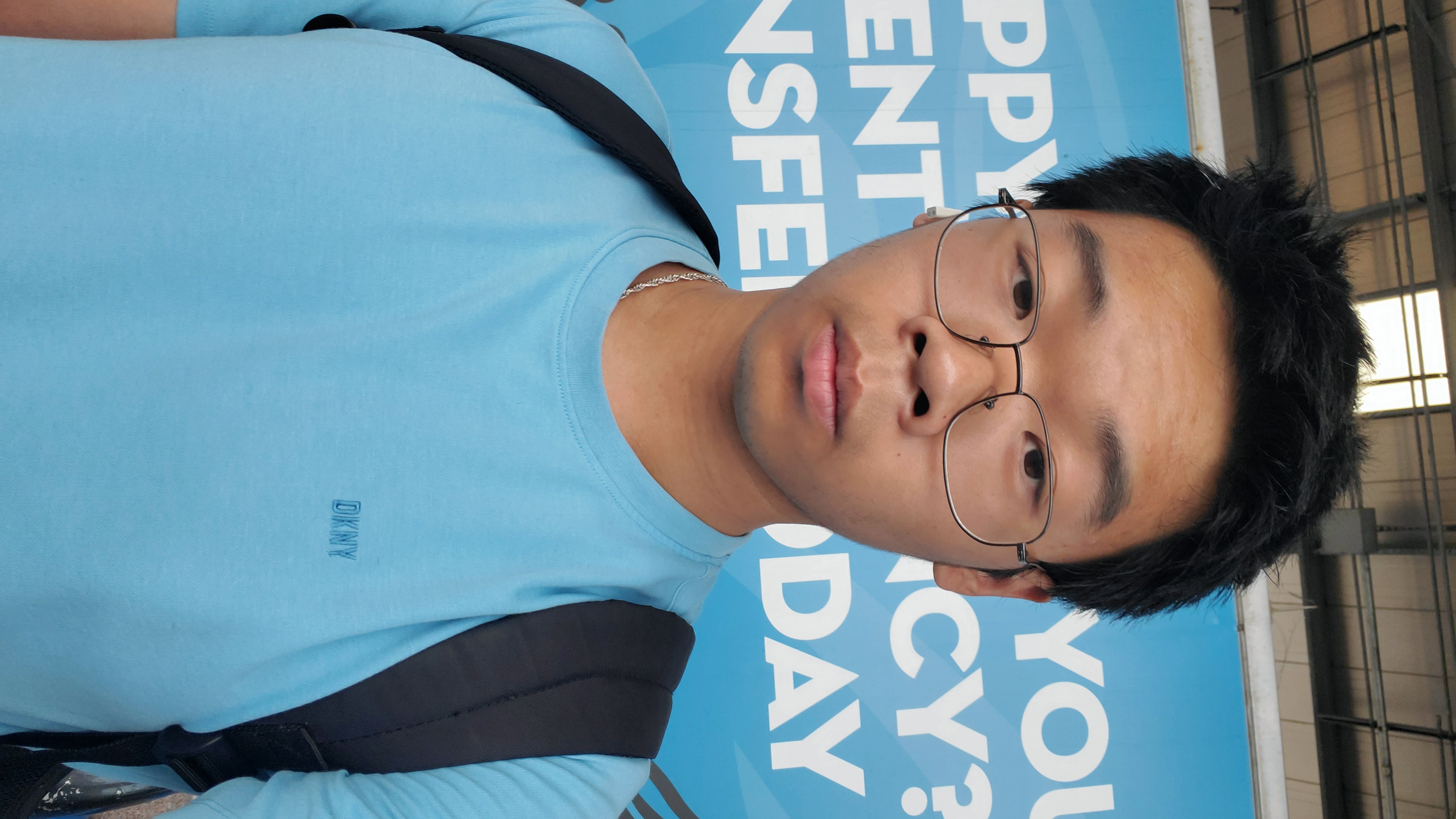
Tai is a junior at Science Leadership Academy with a knack for programming various projects, from web development to image manipulation. With 5 years of experience in programming and STEM-based fields, he thrives in the face of technical challenges. Outside of programming, he is a rice and bread connoisseur.


Another known fact about him is that he has been in robotics for three years and has designed and programmed countless intake mechanisms. He loves creating complex designs that do what they are meant to do. Some might say he is overengineering, but overengineering should be the minimum. Other than robotics, Tai has been involved in various engineering and AI internships and competitions, working to refine his command over Python, AI, CAD, and problem-solving skills.


After college, Tai aims to work as a mechatronic engineer, developing robots and devices that will help solve daily dilemmas and make the world a better place. Although if the world takes a different turn, he is always up for working at Lockheed Martin.


Lately, he can be found at home binge-watching YouTube shorts or running around Pennypack.
\ projects

DoseMate

DoseMate

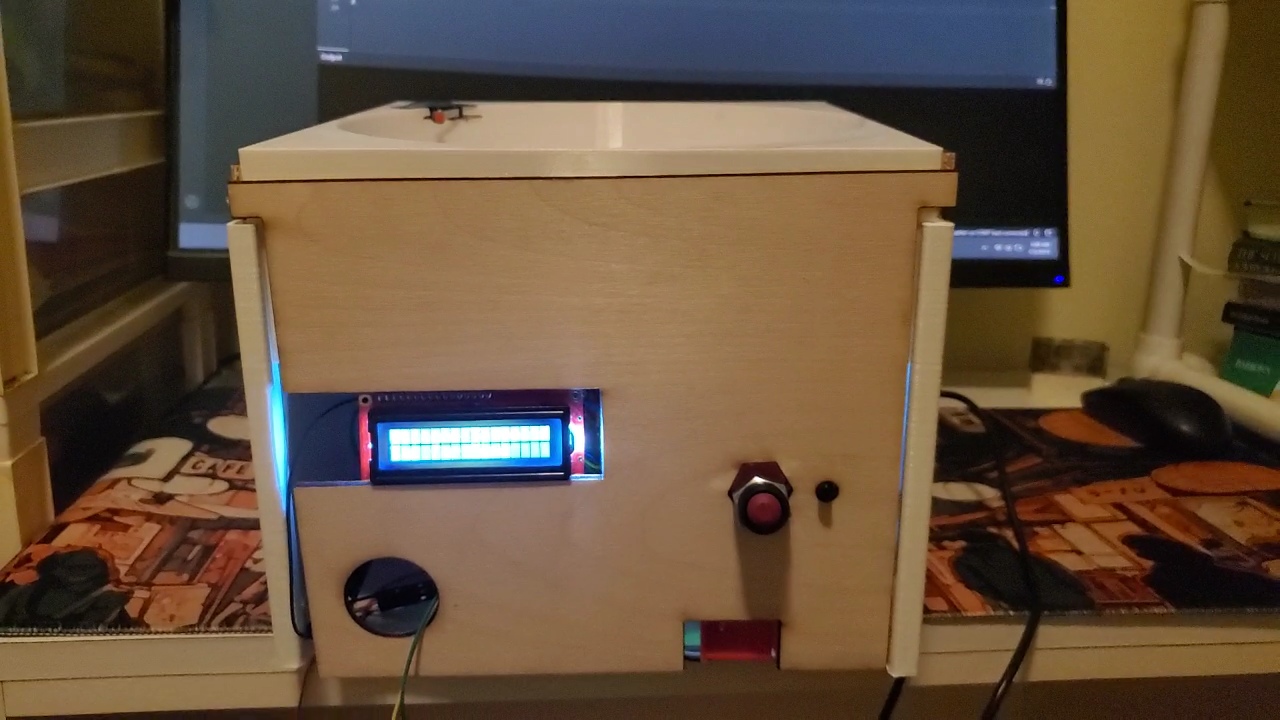
DoseMate is my team's (Analeigh, Rafi, Ryan, and I) Arduino invention for the SLA 2025 junior Arduino invention challenge. DoseMate is an automatic pill dispenser that holds up to six different pills and portions them for you. While Analeigh and Rafi worked on the CAD and structure aspect of the dispenser, Ryan and I worked on the electronic side. Ryan spent most of the time tuning the servos, while I mainly worked on the user interface and backend. I developed a user interface using a button, LCD screen, and a rotary encoder. All of this is connected to an array that stores all the information and processes it.

The biggest struggle during this project was getting the Arduino to communicate to the ESP 32 and for the servos to turn to exactly where they had to go. The problem with communication was solved after two days of programming, however, the servos were never able to be fully calibrated due to the lack of an encoder.

Ultimately, DoseMate never worked as intended, but I learned a lot about programming in C and working with Arduinos and ESP.

Fusion 360 Arduino C
Wanderer

Wanderer

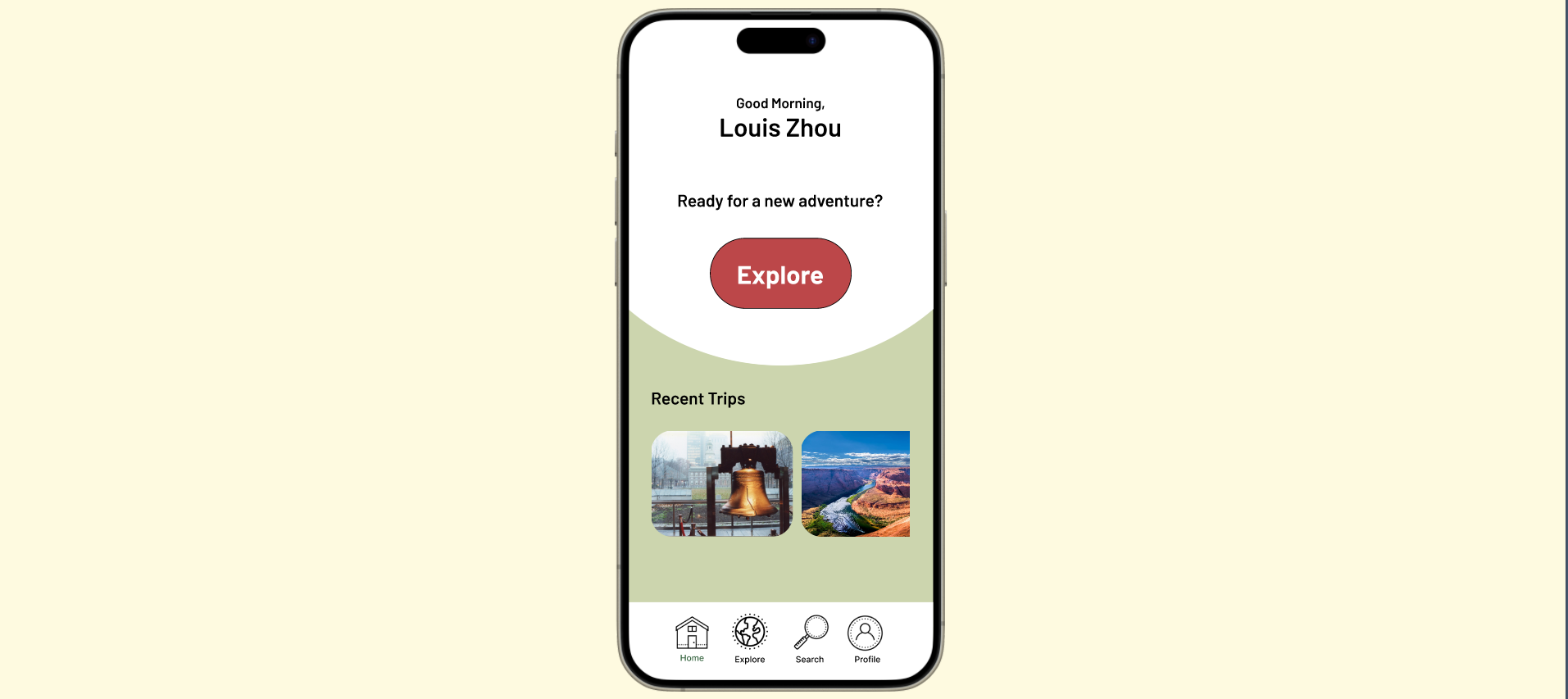
Wanderer is the app that we created. It is an AI smart exploration app that helps the youth, especially students, become more socially aware and truly understand the important cultural and historical aspects of their community through interactive in-person and virtual guided tours. The purpose of our app is to also combat the decrease in social interaction because of high screen time usage by encouraging the youth to utilize technology for a good purpose and explore what their area has to offer. The goal is to make learning interactive, fun, and immersive by connecting people with the places around them.

Throughout the project, I helped to research and played a significant role in designing the application on Figma by applying UI/UX rules.

After several months, my team and I pitched our app to a panel of judges and placed 2nd out of 8 teams.

Figma UI/UX Research
LawByAi

Law By AI

Law by AI is an accessible and engaging technology for people of all ages and backgrounds to exercise their knowledge of law every day.

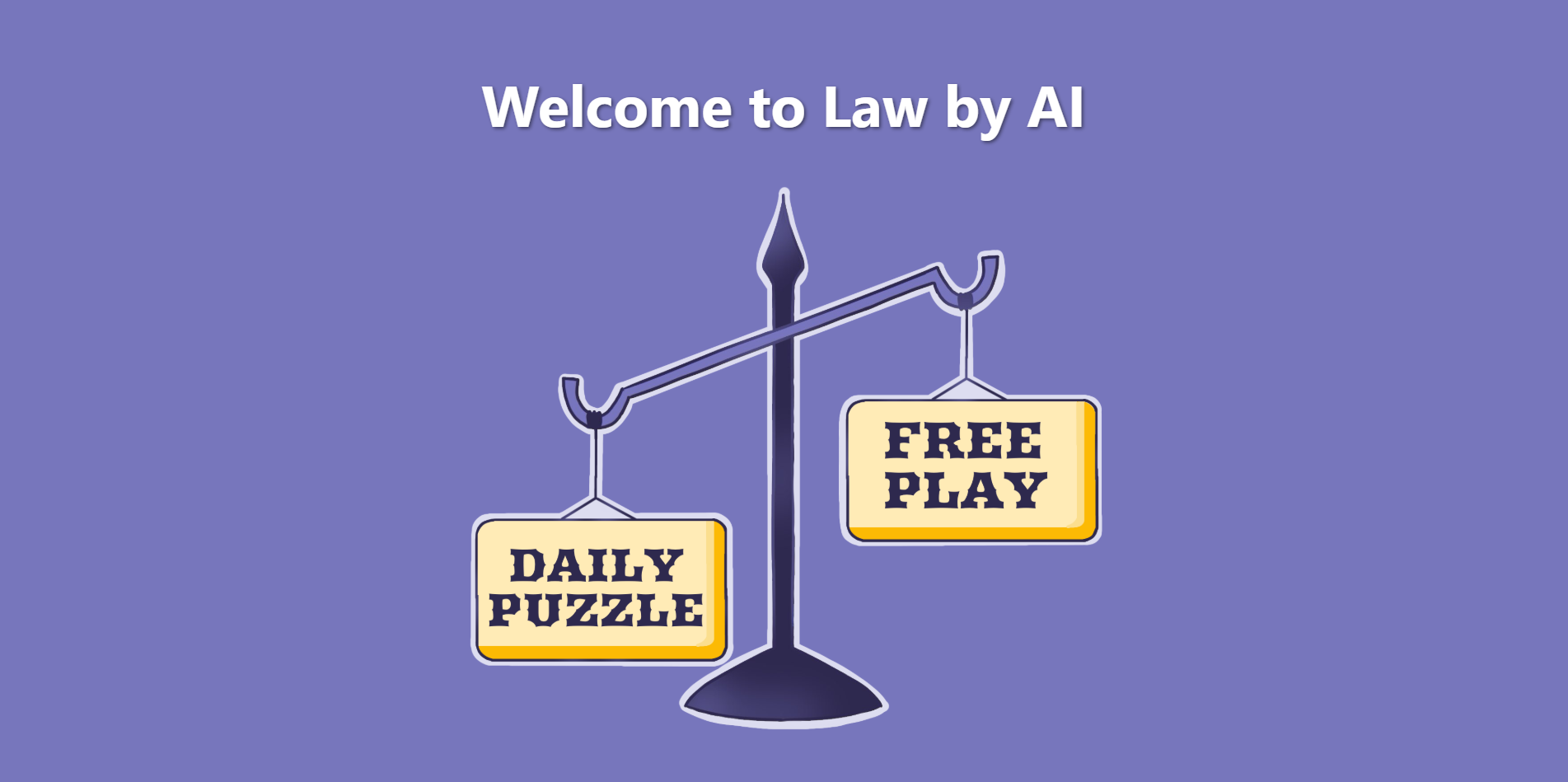
There are two versions of Law By AI:

The daily challenge is similar to the popular game, "Wordle." Users have five replies to solve a legal scenario. This game mode is ranked and displayed on the leaderboard.

The freeplay version is similar to daily, however, users can work their way through multiple prompts and working in a way that's unranked.

JavaScript UI/UX AI FireStore
osirisAI

Osiris AI

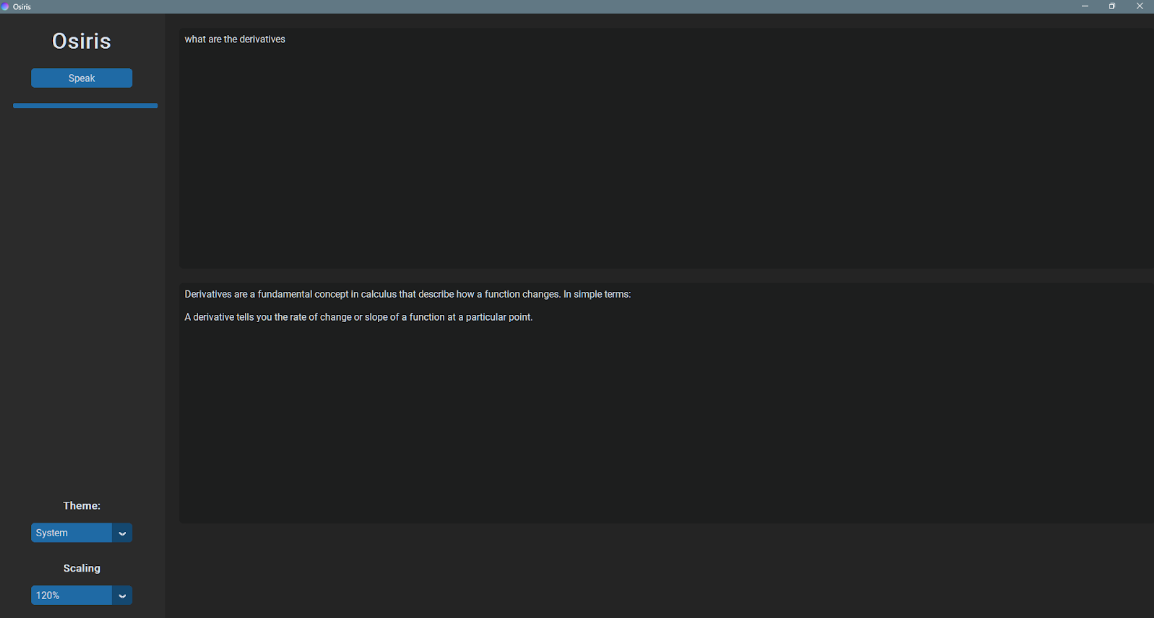
In 2023, I was frustrated that OpenAI wouldn't release their voice assistant, so I programmed my own. Osiris uses ChatGPT 3.5 Turbo as the core. I used CustomTKinter to create the application, and using Google's text-to-speech and voice recognition library, I created an interface for the user to utilize ChatGPT through voice.

CustomTKinter UI/UX OpenAI
rube goldberg

Rube Goldberg

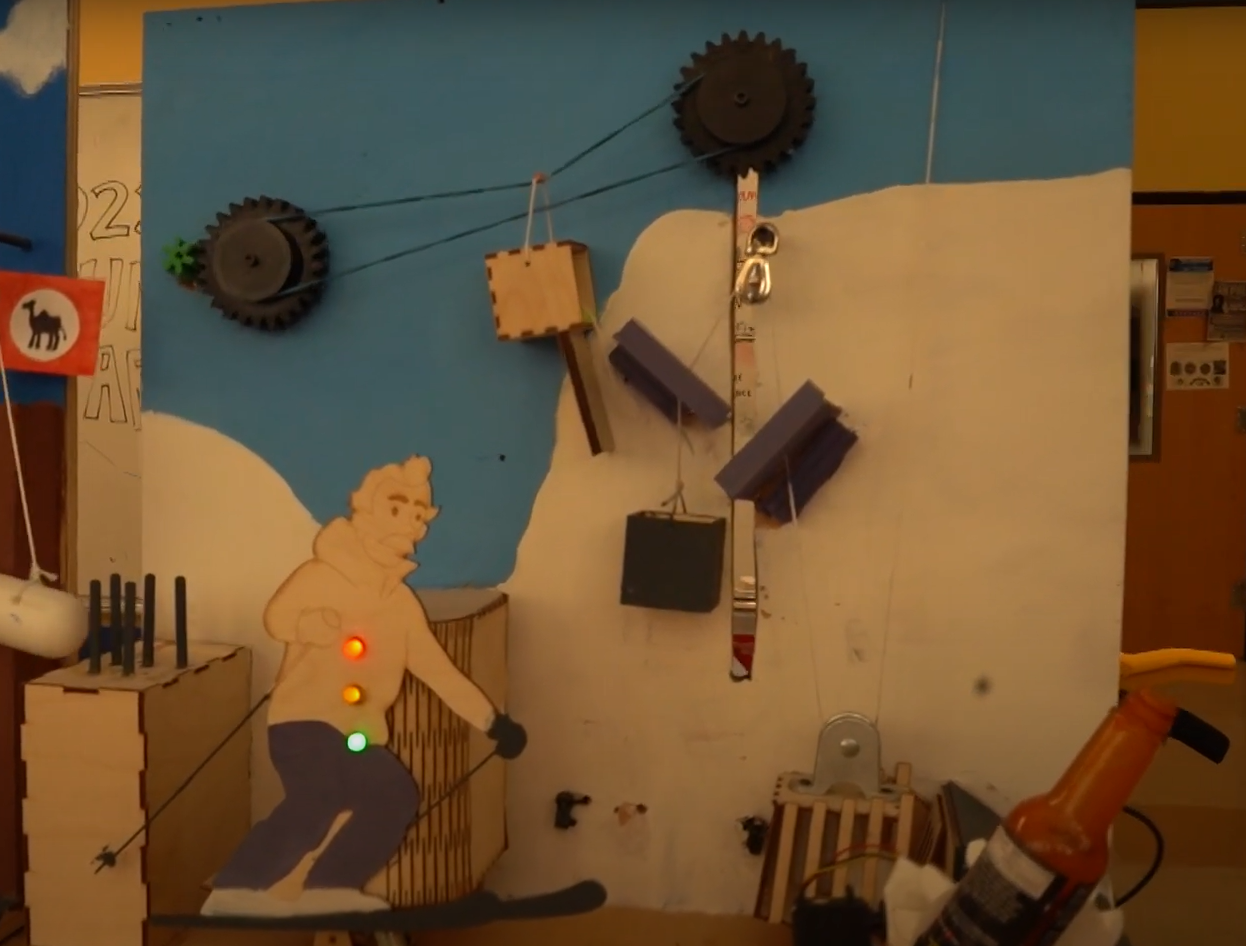
The final section of the SLA 2024 Sophomore Rube Goldberg machine. We used CAD, mechanical engineering, and electrical engineering to bring Wilbur Scoville's Ski Resort to life.

The goal of this section was to bring the egg to the skillet. But we included a twist. We included a servo that seasoned the egg with the hottest hot sauce we could find.

During the actual performance, our section failed 11 times and finally succeeded on the 12th.

The 11 failures came from problems with the electronics components, like servos and beam breaks, which were difficult to use without prior electrical engineering knowledge.

Arduino Mechanical Engineering Fusion 360 3D Printing Laser Cutting
paikitty

PaiKitty

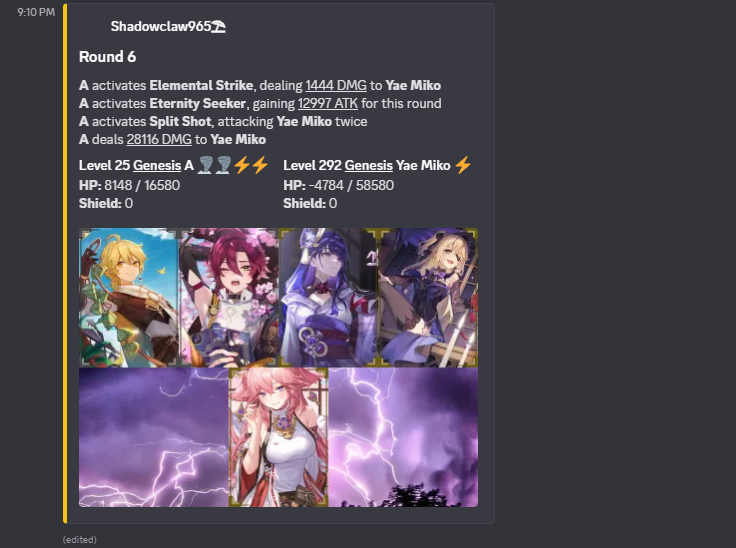
PaiKitty is a Discord JRPG bot. Players collect anime characters and use them in battles.

PaiKitty was developed using Discord.py, a Python library that allows me to interact with the Discord API. Having learned from my earlier, slower version of PaiKitty, which used JSON as the database, I opted for learning MongoDB, which is a non-SQL database. Being a non-SQL database, MongoDB is organized like JSON while being more efficient with more data.

Ultimately, PaiKitty was discontinued in early 2024, but the experience of MongoDB and Python stayed.

Python MongoDB Pillow
Meow! Search

Meow! Search

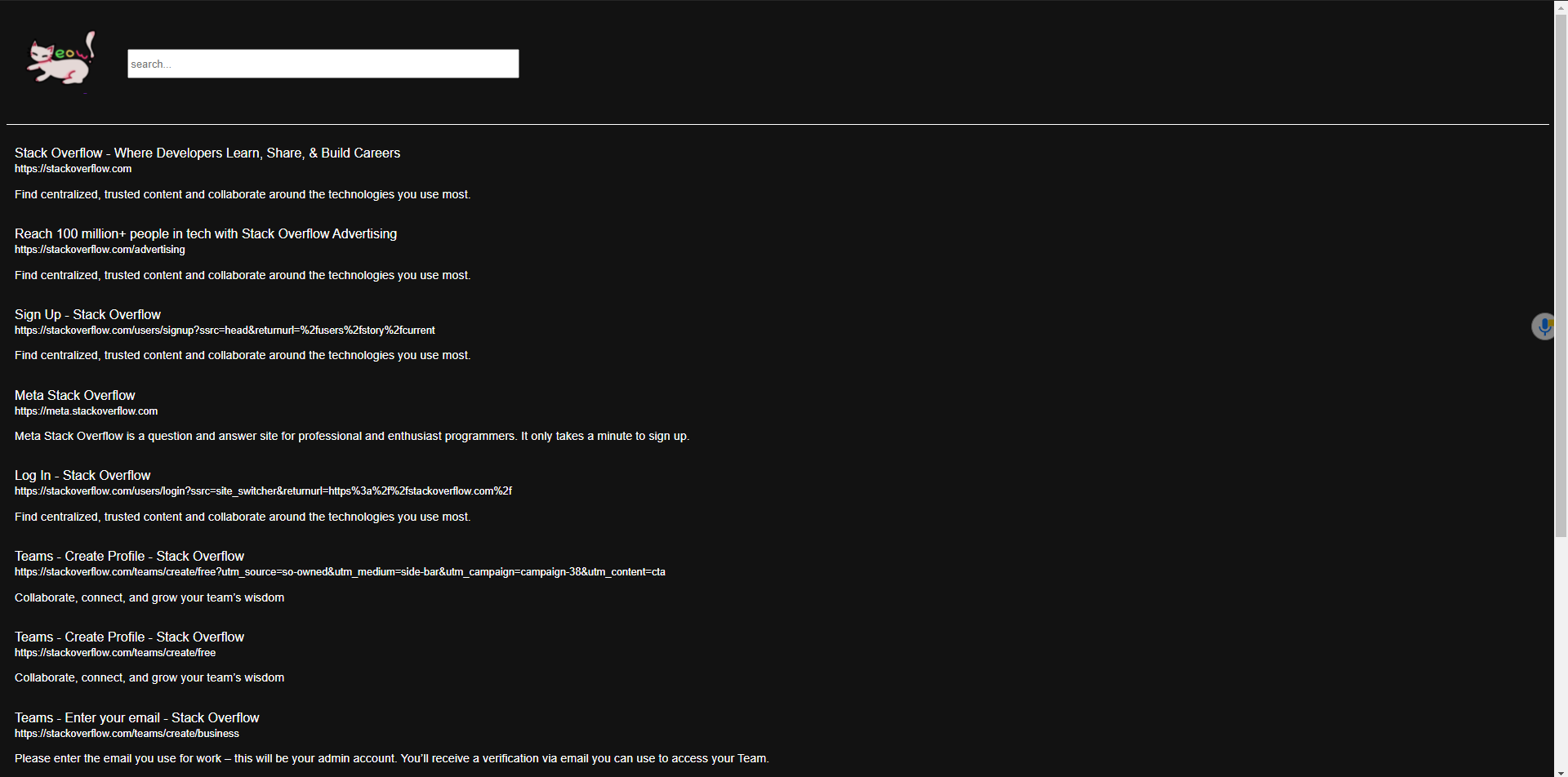
Meow! Search is a search engine that I created because of the fear of being tracked. Modern search engines collect a ton of information from their users. Every search they make, so that they can make their query results "better." But who knows what is really happening with our data? Thus, Meow! Search was created to eliminate that fear.

Meow! Search was programmed entirely in Python. I used libraries like Flask for the webpage, BeautifulSoup to scrape the web, and JSON to store the website and extra information.

Throughout the process, I did a lot of research into Google and Bing. I discovered that Google's website ranking algorithm is based on backlinks. These are linked from one website that links back to another. So that's exactly how I created my search engine.

The main challenge of this project was that JSON is not designed to function as a database, so each query took six minutes, and the amount of data that could be stored was limited. Additionally, most websites have limits for how many times you can access them per second, and the web scraper I programmed moved way too fast, so I was temporarily banned from many websites.

Ultimately, I ran into hardware limits and had to stop the project. But the search engine achieved my goal of being accurate without collecting user information.

Python Django Web Scrapping
photovoltaic

Photovoltaic Array Plan

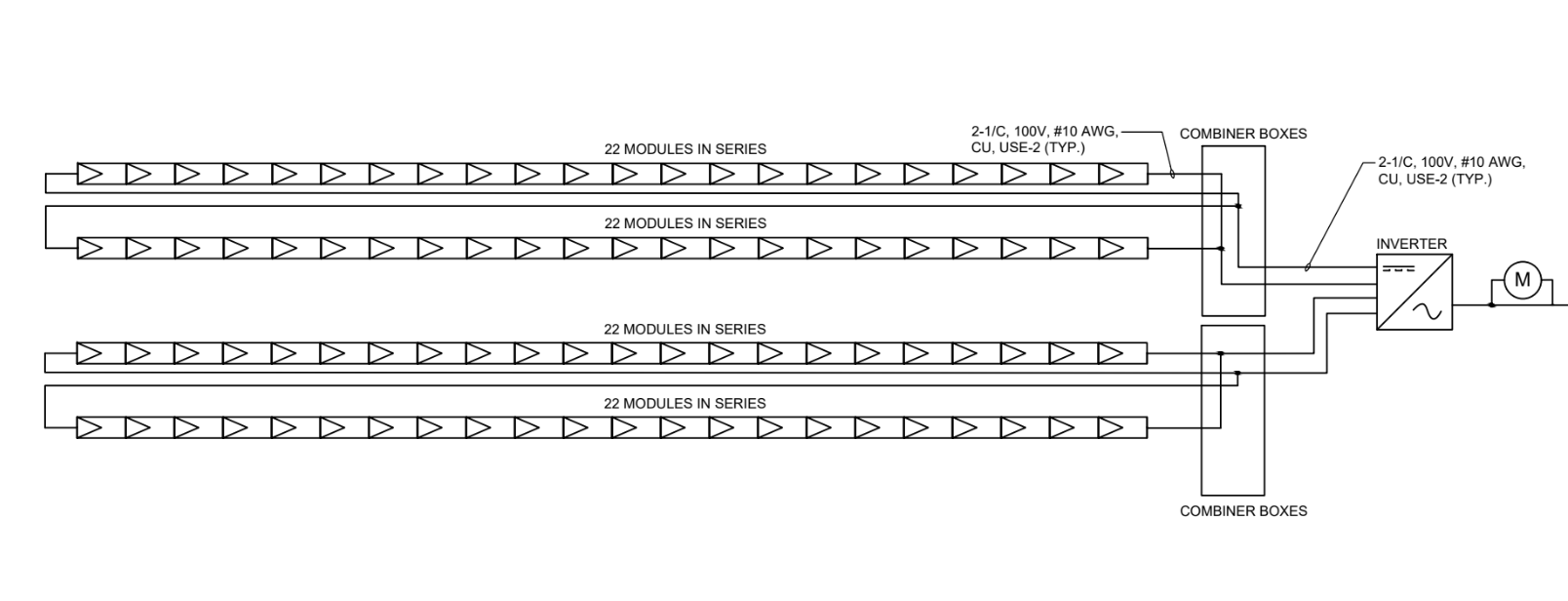
During the course of my sophomore internship, I worked alongside an electrical engineer at Burns Engineering Group. We studied specific components of photovoltaic systems, including panels, combiner boxes, inverters, and wires.

Finally, for the final project, I created a photovoltaic system for a concept school in Philadelphia. I looked into panels and inverters that are compatible with each other. Then, calculated the azimuth and angle to maximize the output. Finally, to account for the significant output loss of panels in partial shading, I included power optimizers, which are small chips attached to the back of PV arrays.

AutoCad REVIT Photovoltaic

\ contact me